
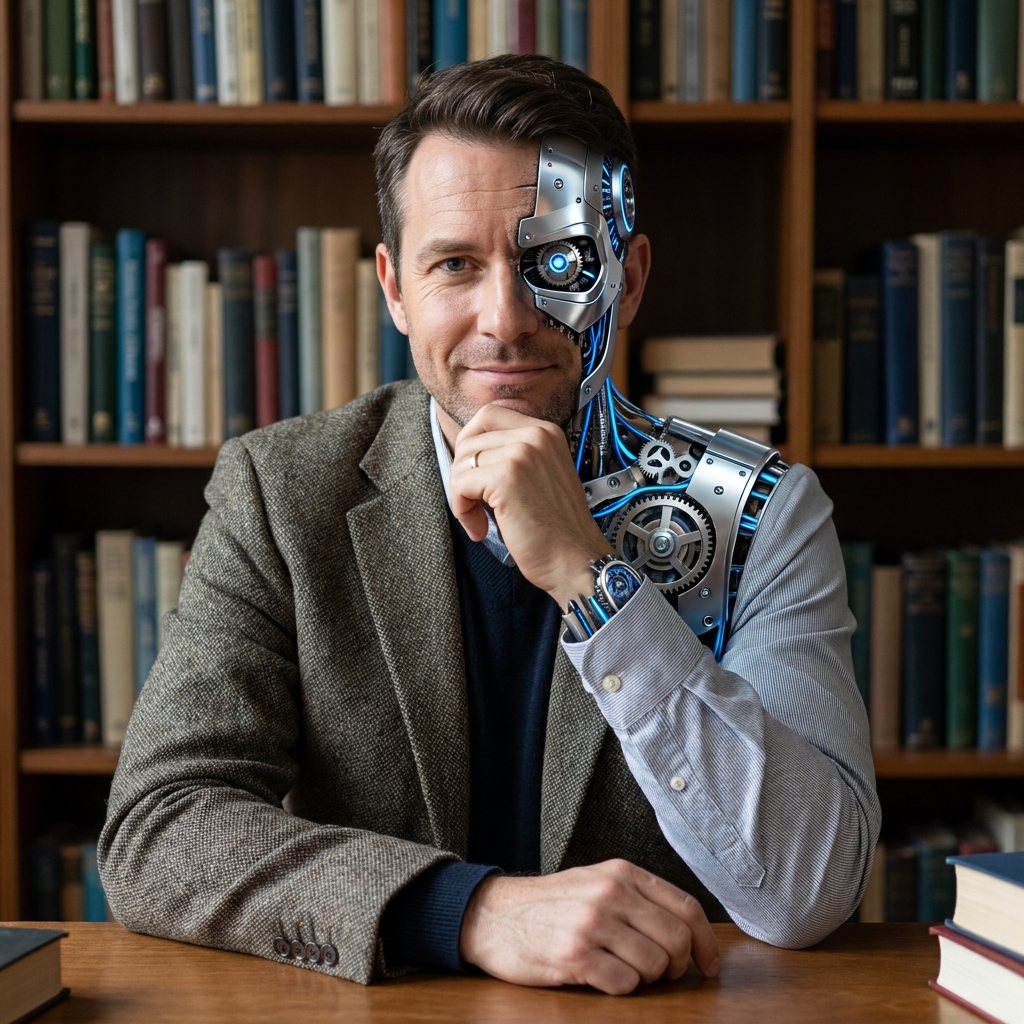
Perhaps one of the most controversial topic argued to date is the fear of: “This is the machine that finally replaces us.” . From early robotic process automation to the current explosion of generative AI, I can tell you that the reality is entirely different. AI isn't here to replace human creativity. It’s here to automate the friction that constantly stifles it. When we offload the mechanical, time-intensive parts of our work to AI, we don’t lose our creative edge. We finally get the breathing room to actually use it. Here is how AI automation is quietly triggering a renaissance in human creativity. Killing the "Blank Page" Every creative professional—whether a software engineer architecting a system or an art director planning a campaign—knows the dread of the blank page.
Historically, we’ve wasted enormous amounts of cognitive energy just getting from zero to one. Generative AI fundamentally solves this by acting as a high-powered brainstorming partner. Studies show that AI is exceptionally good at convergent thinking—gathering vast amounts of information and synthesizing it quickly. If you need 50 variations of a product headline or a rapid prototype of a Python script, an AI model can generate them in seconds. But here is the catch: AI is essentially a prediction engine trained on what has already been done. It provides a highly competent baseline. By instantly generating the "average" or "expected" ideas, AI forces human creatives to push past the obvious and reach for truly novel, divergent concepts. You no longer waste hours brainstorming the basics; you start your creative process on third base. Offloading the Friction of Execution. Think about how much of your day is actually spent being creative, versus how much is spent executing the mechanics of your job. Research suggests AI could automate up to 26% of technical tasks in art, design, and media. Consider what that actually looks like in practice: Designers spending less time manually masking images and more time on visual strategy. Writers using AI to instantly summarize transcripts, freeing them up to focus on narrative arc and emotional resonance. Developers using tools like Copilot to automate boilerplate code so they can focus on complex system architecture.
Creativity requires cognitive surplus. When you aren't mentally exhausted by the brute-force mechanics of information gathering and tedious formatting, you have the bandwidth to connect disparate ideas—which is the biological definition of innovation. The Risk of "Sameness" (And the Human Premium)It’s easy to look at AI’s capabilities and assume it will just do everything for us. But recent data from Wharton highlights a critical limitation: when teams rely too heavily on AI for ideation, their output becomes highly uniform. Because AI models are trained on the same massive datasets, they naturally converge on similar, safe answers. In the algorithmic age, being "average" is the worst possible outcome for a brand or business. Careless automation leads to a sea of identical ads, identical codebases, and identical product designs. This is where the Human Premium comes into play. As AI perfects the mechanics of creation, unpredictably human elements become the ultimate differentiator. The quirks, the lived experiences, the emotional intelligence, and the willingness to break the rules—these are traits algorithms cannot replicate. To succeed in an AI-saturated market, creatives must lean into their humanity more than ever before. The New Creative Blueprint. The most successful professionals of the next decade won't be the ones who resist AI, nor will they be the ones who blindly outsource their thinking to it. They will be the AI-native creatives. They will use automation to compress days of research into minutes. They will use language models to spar with their own ideas and poke holes in their strategies. And then, armed with the time and mental energy that AI has handed back to them, they will do what humans have always done best: disrupt the status quo, inject emotion, and build something the world has never seen before.
We aren't automating creativity. We are automating the busywork so that true creativity can finally take center stage.